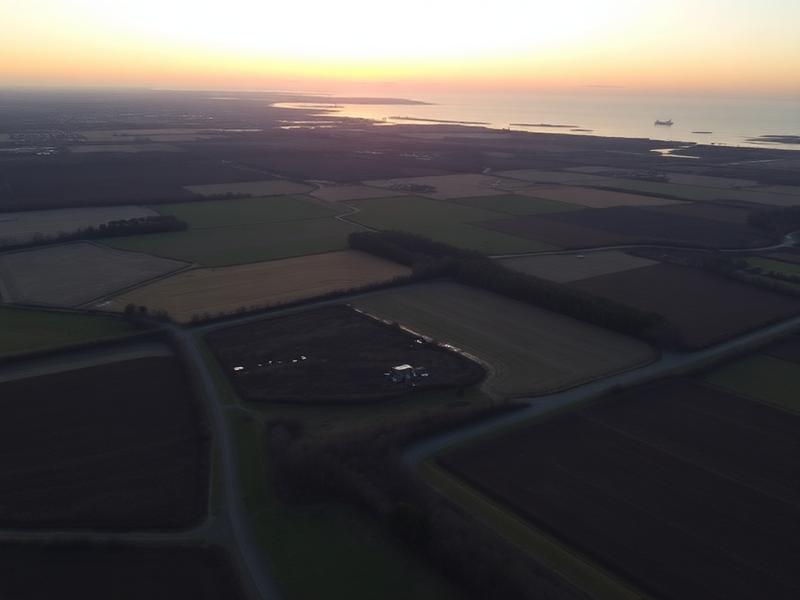
Land and development sales, Virginia's Eastern Shore
Selling Land on the Eastern Shore? Sell What Can Be Done With It.
A house sells on what it is. Land sells on what it can become, and the buyer wants proof: soils, access, zoning, flood zone, what the county will allow. I answer those questions before the buyer asks, put the parcel in front of the people who buy land, and manage the sale through closing. One licensed Virginia broker with 40+ years of experience, a Class A contractor's eye for what can be built, and a title agent's eye for what can go wrong.
Landowners I work with
Serving Accomack and Northampton Counties, Virginia's Eastern Shore. Own a lot on Chincoteague Island? I buy those directly.
Acreage and farmland
Working farms, tillable ground, and family land held for generations, sold whole or in parcels.
Timber and recreational land
Wooded tracts, hunting land, and parcels where the timber is part of the value.
Waterfront and water-access parcels
Bayside, seaside, and creek-front land where the buyer is paying for the view, the dock rights, and what can be built.
Building lots
Single lots and small groups of lots, in subdivisions and along county roads, on and off the island.
Development and subdivision tracts
Land with subdivision or commercial potential, where the sale price depends on what the county will approve.
Estates, heirs, and long-time holders
Land that has come down through a family and is now carried by people who live elsewhere and are ready to be done.
A house sells on what it is. Land sells on what it can become.
A home buyer can see the kitchen. A land buyer is looking at a field or a tree line and trying to picture a house, a farm, a subdivision, or a hunting camp, and every question they can't answer comes off the price. On the Eastern Shore, those questions are specific.
What a land buyer needs to know before making an offer
- Soils and septic — Whether the ground will support a conventional or alternative septic system, and the cost difference between them. On the Shore, this decides more land deals than anything else.
- Wetlands and Chesapeake Bay Preservation Act buffers — Where the buildable envelope actually is once resource protection areas and wetlands are mapped.
- Flood zone and elevation — What zone the parcel sits in, what that means for construction cost, and what it means for insurance.
- Zoning and subdivision potential — What uses are permitted by right, what needs a special use permit, and how many lots the county would approve.
- Legal access and road frontage — Deeded access or a recorded easement, state road frontage, and whether an entrance permit is realistic.
- Utilities — Electric at the road, well or public water, and whether the buyer is looking at a long service run.
- Survey, boundaries, and title — A current survey, agreed boundaries, and a chain of title without the heir gaps that stall closings on old family land.
- Land-use taxation and rollback — Whether the parcel is in a land-use program and what rollback taxes a change of use would trigger.
A listing that says "beautiful 12 acres, call for details" leaves every one of those questions open, and the buyer prices in the risk. My job is to close the questions before the first buyer calls.
How I sell land, start to finish
- 1
Consultation and broker opinion of value
We talk about the land, how you came to own it, and what you want out of the sale. I pull the county records, the plat, the soils and flood maps, and comparable land sales, walk the parcel, and give you a written opinion of value with the reasoning shown. If the land is worth more held, subdivided, or sold in pieces than sold whole, I'll say so.
- 2
Answer the buyer's questions before they ask
Land buyers walk away from uncertainty. Before we go to market, we assemble what a serious buyer and their lender will want: survey or plat, soil evaluation or septic history, zoning confirmation, wetland and flood mapping, access documentation, timber cruise if timber is part of the value, and any easements or restrictions of record. Where a perc test or survey would add more to the price than it costs, I'll tell you and coordinate it.
- 3
Package the land properly
Drone aerials with boundary overlays, a plat and location map, soils and flood exhibits, and a written description that tells a buyer what they can do with the property, not just where it is. Land sells on possibility; the package has to show it.
- 4
Put it in front of the buyers who buy land
- Both MLS systems: the Eastern Shore Association of REALTORS® MLS and Bright MLS, which reaches agents and their clients across DC, Maryland, Delaware, and parts of Virginia, West Virginia, Pennsylvania, and New Jersey. Most Shore land listings never leave the local system; yours will.
- National land marketplaces: separate placement on the land-specific platforms where acreage, farm, timber, and recreational buyers search (Land.com, LandWatch, Lands of America).
- Direct outreach: builders, farmers, investors, developers, and the brokers who represent them, both on the Shore and in the metro markets that feed it.
- A sign that works: land still sells to the person who drives by. A professional sign with a number that rings my cell, not a call center.
- 5
Structure the deal and negotiate
Land contracts have their own terms: feasibility and due diligence periods, perc and survey contingencies, timber reservations, and, often, owner financing. I've written and negotiated all of them. Every offer is compared on what you net and when, not just the headline price, and if owner financing gets you a better price or a better tax result, I'll show you how to structure it safely.
- 6
Due diligence through closing
Survey, title, easements, entrance permits, and the buyer's feasibility work, tracked to deadline. I've been a licensed title insurance agent for years; old family land carries old title, and I find the problems early, while there's still time to fix them.
The background behind the advice
I've taken land through the process myself.
I've carried raw land through subdivision approval, built on it, and sold the finished lots and homes. I know what a developer pays for, what the county asks for, and where the value in a tract actually sits.
40+ years as a licensed Virginia real estate broker.
Multiple market cycles, more than 1,000 agents trained and managed, and leadership roles including association president and Virginia REALTORS® Hall of Fame. Land sales run on patience and preparation; experience is what keeps them moving.
Class A contractor.
I can stand on a parcel and see what can be built, what it will cost to get a house or a road onto it, and what a builder will pay for it. That makes the valuation real and the negotiation informed.
Licensed title insurance agent.
Family land is where title problems live: heirs never cleared from a deed, unrecorded easements, boundaries that don't match the plat. I read a title commitment the way a settlement attorney does, and I fix problems before they hit the closing table.
Both MLS systems, every time.
Reach beyond the Eastern Shore to the mid-Atlantic buyer pool that most local land listings never see.
Personal service.
You work directly with me, not a junior associate, not a team. Because of that, I take on a limited number of listings at a time. If you're thinking about selling land in the next year, the time to talk is now.
Development tracts: sell the land, or sell the lots?
A tract with subdivision potential can be sold three ways: whole to a developer, with approvals in hand at a higher price, or as finished lots you develop and sell yourself. Each has a different number, a different timeline, and a different risk. I've done all three.
I model the lot yield, the engineering and approval cost, the carry, and the market for finished lots, and put the options side by side. For most owners the answer is clear once the numbers are on paper. For those who choose to develop, I coordinate with the surveyor, engineer, and county through approval, and market the lots to builders I know.
Questions landowners ask me
Selling a home or a commercial property instead? See both residential paths or the commercial page.
Start with a conversation about the land
No obligation, no pressure, no forms. Tell me where the parcel is and what you're hoping to do, and I'll tell you what I'd do with it.
Call or text me directly: (540) 729-7801Chuck@ChuckCornwell.com
Chuck Cornwell — Licensed Virginia Real Estate Broker · Licensed Title Insurance Agent · Class A Contractor · CHC, Inc. DBA CHC Realty, Accomack County, Virginia